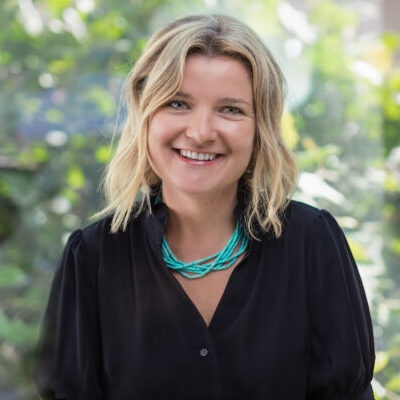
Reflections on a decade+ of digital health: A conversation with Halle Tecco
Rock Health was founded over a decade ago on the belief that healthcare should work massively better, for more people. Since then, few have had a front-row seat to digital health innovation like Rock Health founder Halle Tecco—a rare combination of experiences and perspective that she brings together in her new book, Massively Better Healthcare.
To celebrate the book’s publication, our CEO Katie Drasser sat down with Halle to hear her reflections on how the digital health ecosystem has evolved since the early days. From the rise of consumer-facing healthcare to persistent challenges around access and incentives, Halle shares what she saw coming all those years ago, what’s changed, and what still needs to be done.
Katie Drasser: When you started Rock Health, what did you see coming in healthcare that wasn’t widely understood yet?
Halle Tecco: We saw that healthcare was about to become consumer-facing in a very real way. We were repeatedly gaslit and told that D2C models would never work in healthcare. Today, 2.5 million Americans subscribe to Hims & Hers, 5.5 million Oura rings have been sold, and nearly 30 million people have used GoodRx to save on prescription medications (just to name a few). Healthcare consumers are savvier than ever, and we’re demanding better, more accessible, more affordable healthcare.
KD: Looking back, what do you think Rock Health helped catalyze in the broader healthcare innovation ecosystem?
HT: Rock Health helped catalyze digital health entrepreneurship and bring together the technology and healthcare worlds. When we started, very few people understood both. Today, there is a generation of founders, operators, and investors who are fluent in both domains. Rock Health helped create that bridge!
KD: What has changed the most in healthcare innovation since those early days, and what has changed the least?
HT: What has changed the most is evidence of success. We now have many examples of companies that have scaled, built durable business models, and made a genuine impact. What has changed the least is representation. Women remain underrepresented, particularly in leadership roles and in capital allocation.
KD: What’s one lesson you’ve learned about what it actually takes to change healthcare (vs. what people think it takes)?
HT: Founders can absolutely make a difference, and many already have. But some of the biggest barriers in healthcare cannot be solved by startups alone. Certain problems are rooted in policy, entrenched incentives, or what I call “the incumbent blockade.” Real change often requires both innovation from builders and policy change that resets the rules of the system.
KD: Why did you decide to write this book now, and what do you hope it unlocks for leaders in the next era of transformation?
HT: I realized I had gone from being treated as an outsider who did not belong in healthcare to being viewed as an insider. Writing this book was my way of using that vantage point more responsibly. I wanted to open doors for others and help increase their chances of success.
With new tools like AI and a healthcare system reaching a breaking point, the stakes are only getting higher. I wrote the book now so the next generation of leaders has a clearer map than I did.
KD: When you look ahead 10 years, what are you most optimistic about in healthcare—and what still worries you?
HT: I am optimistic about earlier intervention and prevention, supported by better data, technology, and care models. What still worries me is that innovation will continue to sit on top of a financing system that rewards short-term thinking rather than long-term health.
KD: What do you hope Rock Health continues to represent in the ecosystem going forward?
HT: I hope Rock Health continues to serve as a bridge between insiders and outsiders, mission and margin, and ambition and realism. Most of all, I hope it continues to inspire and support people who might not otherwise feel like they belong working in healthcare, but who are essential to its future.